Does Beach Seine Fishing Threaten Marine Life?
Story | Jera | Photos | Jera and BBC
Introduction
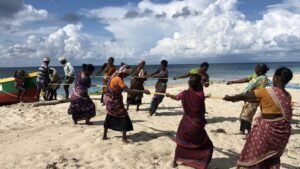
Beach seine fishing is a traditional fishing method practiced in shallow coastal areas. In this method, a long net is cast into the sea from the shore, and the ropes on both sides are pulled by people standing on the beach using human effort to catch fish. This fishing practice has long been carried out in the Northern and Eastern Provinces of Sri Lanka.
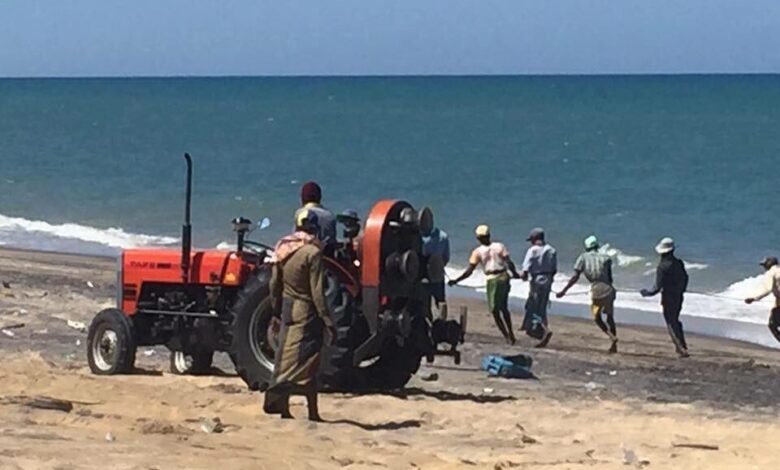
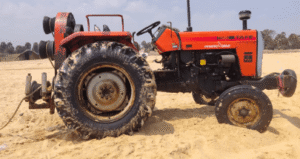
However, due to many modern changes in the fishing industry, a method of pulling the nets using tractors instead of human labour had gradually been adopted in beach seine fishing. Nevertheless, as the use of tractors to pull the nets has been causing damage to marine resources, the Government of Sri Lanka banned this practice starting from the 1st of January this year.
Recently, a protest was held in Vadamarachchi East demanding the removal of this ban. The following are some of the views expressed to our platform by fishermen from the area regarding this protest and the impacts caused by the practice of pulling beach seine nets using tractors.
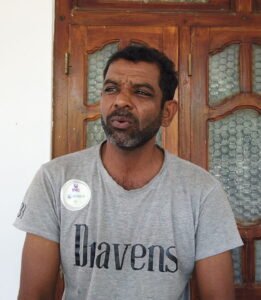
Mr. Sivapathasundaram Sivakumar, a resident of Vaththirayan village in Vadamarachchi East, explains the impacts faced by beach seine fishing in the area as follows:
“In recent times, illegal fishing practices have been increasing in Vadamarachchi East. The fishermen of this area, who have already been affected by the war and the tsunami and are economically struggling, have carried out many protests against these illegal fishing activities. We have raised these issues at District Coordinating Committee meetings. We have also informed the minister about it. Recently, we even participated in a protest that took place in Jaffna.
The Ban and the Protest
“At present, a very good law has been introduced—something we have not seen before. This law bans the use of tractors for beach seine fishing. We commonly refer to this method as ‘Winch.’
The people here who have been traditionally engaged in fishing were happy when they heard about this ban. However, recently a group of people brought workers from areas such as Puttalam and Udappu and organized a protest in Vadamarachchi East demanding the right to continue the ‘Winch’ method.
Many of the people who participated in that protest were asking what harm is caused by the ‘Winch’ fishing method. Even people who have no knowledge of fishing raised the same question. They asked what the problem is with modernizing the fishing industry.
An Unjust Protest
“Until now, there have been no large-scale modern fishing methods in Vadamarachchi East. We have been carrying out fishing mainly using small boats. In addition to that, there are many small beach seine fishing activities. In this method, the nets are cast within about one kilometer from the shore. Elderly people, those who cannot go out to sea, and even women all take part together in beach seine fishing. In fact, it is a fishing method that provides a good livelihood.
However, with the intention of destroying this traditional method, people from areas such as Udappu and Puttalam have come here and are carrying out the ‘Winch’ fishing method. After it was banned, they have now begun protesting. They can practice whatever fishing method they prefer in Udappu, but we oppose them coming here and destroying our livelihoods.
We have already suffered due to the war and have also been affected by Indian trawlers. After struggling for so long, we have managed to come this far. The people from Udappu who have come here to fish should understand this.”
What is the “Winch” Fishing Method?
“In this ‘Winch’ fishing method, the net is set in the sea around 6:00 a.m. Using two boats, they go nearly five kilometres into the sea and cast the net in a wide circle. The net that is set in the morning only begins to shrink around 12:00 noon. However, the traditional beach seine nets used by our fishermen usually close within about one and a half hours. Because the ‘Winch’ method spreads nets across such a large area of the sea, it cannot be pulled by human strength alone. Therefore, tractors are attached to both sides of the net and used to pull it. When the net is dragged in this way, the plants, seaweed, small rocks, and the habitats of fish that exist on the seabed are all pulled up along with the net. As a result, the marine resources are completely destroyed.”
Impacts Caused by the “Winch” Fishing Method
“Because the ‘Winch’ method covers such a large area of the sea, more than ten of our traditional beach seine fishermen who have been working in that area are unable to continue their fishing activities. If we consider ten beach seine operations, nearly 100 families depend on them for their livelihood. But here, even the area where those ten fishermen normally cast their nets is being taken over by a single boat operated by people who have come from outside the region.
Since these large beach seine nets remain in the sea for many hours, the smaller traditional nets cannot catch any fish. Almost all the fish end up getting trapped in these large nets that stay in the sea for hours. In the end, they sweep up and take away all the fish.”
“Not only that, in the areas where beach seine nets are cast, the small-scale fishermen who work using vallams and kattumarams (Local fishing boats), as well as elderly fishermen who set traps for cuttlefish, are also unable to catch anything. They usually carry out their fishing activities only a few meters away from the shore. However, these large beach seine nets—known as the ‘Winch’ method—are set several kilometer into the sea, covering and affecting all those fishing areas.
In our village alone, there are about 400 families, but there are only around 50 boats. The rest are all small-scale fishermen. Because of this ‘Winch’ fishing method, almost all the small-scale fishermen living here have lost their livelihoods.”
“The ropes (or cables) used for the ‘Winch’ fishing method are extremely large and strong. Since the nets are cast over several kilometres, such heavy ropes are necessary; otherwise they would snap. These large ropes do not remain floating on the surface of the sea. Instead, they stay about one to one and a half feet below the water.
Fishermen from our area who go for deep-sea fishing usually return to the shore early in the morning. There have been incidents where, due to fatigue or drowsiness, their boats have become entangled in these ropes, causing damage to the propellers of their engines. Similarly, there have also been cases where fishermen’s legs got caught in these ropes and were fractured.”
Mr. Kanapathipillai Shanmuganathan, who also lives in Vaththirayan village, has been greatly affected by fishing practices that use agricultural machinery. He also explained the impacts of this method as follows:
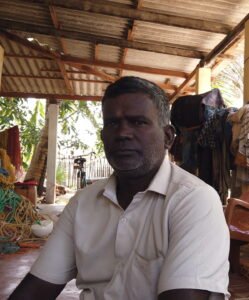
“I am engaged in traditional beach seine fishing where the nets are pulled using human strength. In recent times, the ‘Winch’ fishing method has been increasing. There has been opposition to it as well. Even in the Kattaikadu area, they have been carrying out this ‘Winch’ fishing method. The small-scale fishermen who were affected by the ‘Winch’ fishing there contacted us, and together we organized protests. However, at that time, those who were engaged in the ‘Winch’ method did not accept our concerns.
Now the government itself has announced a ban on the ‘Winch’ fishing method across Sri Lanka. This is a favourable decision for fishermen like us. In reality, this is a fishing method that should indeed be stopped. It is not only dangerous for small beach seine fishermen but also for other small-scale fishermen.
For example, if a single ‘Winch’ fishing operation begins casting the net in the morning, it can take until about four in the evening to finish pulling it in. While hundreds of us depend on that sea area for our daily fishing activities, one person can cover several kilometers of the sea with a single large net. Because of this, fish do not come closer to the shore. As a result, small-scale fishermen and traditional beach seine fishermen (who pull nets using human effort) are severely affected. Therefore, this ‘Winch’ fishing method must be permanently stopped. However, there is still a doubt in our minds whether this might become just another eye-wash drama, similar to what previous governments have done.”
“For example, if someone begins casting a mechanized beach seine net at Thalaiyadi, he will extend the net beyond our coastline and even past the Aazhiyavalai sea area before completing the circle. In this way, when a single person casts a net covering three villages, the small-scale beach seine fishermen from these areas have no opportunity to cast their own nets. Beach seine fishing can only be carried out during daylight hours when there is sunlight. So how can small fishermen survive here under such conditions?
When such problems arise, the Department of Fisheries and Aquatic Resources has called both them and us for discussions. In front of us, the department would say that from now on they would not do it that way and that they would cast nets using only 24 or 25 ropes (cables). However, they do not follow these rules. They load the nets in one boat and the ropes in another boat and take them out to sea. The boats then move across the sea like chariots.”
Mr. Thambirasa Sriskantharasa, from Maruthankeni village, who has been traditionally engaged in beach seine fishing, described the situation as follows:
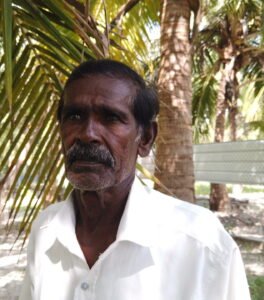
“We have been carrying out beach seine fishing for generations, using human strength to pull the nets. We have never engaged in any activities that violate the law or harm the sea. It was only after 2009 that illegal fishing methods began to appear here. Fishermen from the southern regions came and occupied the most productive fishing areas, giving small incentives to the local people to gain control over those areas. Initially, mechanized fishing methods started in places like Sundikkulam and Vannankulam, and gradually spread as far as Kudaththanai. They continue this by offering small incentives even to our local people.”
He continued:
“For traditional beach seine fishing, a permit fee of Rs. 45,000 must be paid. But now, there is not even enough income to pay that. Fish no longer come near the shore. In fishing done with human effort, everyone in the community benefits—elderly women, those who cannot go out to sea—all can pull the net and earn an income from the fish. But now none of that happens. Mechanized ‘Winch’ fishing has destroyed our livelihoods and damaged marine resources. We can only fish properly for about six months of the year. After that, the rains come, floods, storms, and even tsunamis, making fishing impossible. Yet the damage caused by these mechanized beach seine nets is far worse than any of these natural disasters.”
Mr. Rathinasingam Muralidharan, the Jaffna District leader of the National Fisheries Cooperation Movement, provided a clear explanation regarding the ban on beach seine fishing:
“A few weeks ago, in areas such as Vadamarachchi East, Kattaikadu, and Punaithoduvai, those who were fishing using mechanized tractors had organized a protest and also held a press conference. Across Sri Lanka, the use of tractors for beach seine fishing has been banned. This law is to be enforced nationwide, so Vadamarachchi East is not an exception.
According to the beach seine regulations in Sri Lanka, nets cannot be cast using more than 24 ropes (cables). Nets can only be cast from 6:00 a.m. to 6:00 p.m. After that, it is illegal to continue fishing. Each rope (or cable) is about 90 yards long and is meant to be manually wound by hand. In the past, these ropes were tied by hand to the nets.
However, now they have started using machine-wound “thangoosi” cable rolls to pull the nets. Originally, the beach seine nets were tied with rope, but now mechanized nets and strong cables are being used to conduct fishing.”
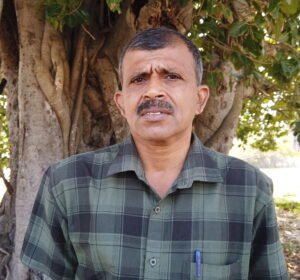
“After 2009, fishermen who migrated from the southern regions and settled in areas such as Kokkilai and Naayaaru began using tractors to carry out beach seine fishing. By around 2015, this method had reached Kattaikadu in Vadamarachchi East. That was when the first machine was introduced. Now, this practice has spread all the way to Thalaiyadi.
Because of mechanized beach seine fishing, fishermen who use human strength to pull the nets are being severely affected. Those using machines typically deploy between 50 to 80 cables (ropes) per operation, whereas the law permits only 24 cables. Traditional beach seine fishing is usually limited to about two nautical miles from the shore (one nautical mile equals 1,852 meters). However, mechanized fishing reaches 8 to 10 kilometers from the coast—well beyond what the eye can see—and occupies a wide area of the sea.
This large-scale use of mechanized nets directly impacts fishermen who rely on human-powered beach seine fishing. Additionally, it causes significant damage to marine resources. The seabed habitats—coral, rocks, and aquatic plants—that support fish production are destroyed by these mechanized fishing operations.”
“Another issue is that the coastal terrain itself is being altered. The wheels of the tractors used for mechanized beach seine fishing continuously push the sand on the shore toward the sea. Grasses, plants, and boundary posts along the coast are destroyed, and even the sand itself shifts toward the sea. The sandbars along the coast become level, making coastal erosion easier. In our neighboring village of Kattaikadu, this is currently happening. Recently, the cyclone Ditwah caused strong tidal waves, and the homes in that village are still affected by the sea. In Sundikkulam, the sea advanced over 200 meters into the village. This shows that mechanized beach seine fishing affects everyone. That is why we say: beach seine fishing should be done using human strength only.”
The reason mechanized tractors are used is that once 80 cables are cast into the sea, it is impossible to pull the net manually. The ocean currents in deep water push and drag the net along—one current on one side, another current on the other side—so fishermen are forced to use tractors to pull the net.” – explained Mr. Muralidharan.
Sources:
- Rathinasingam Muralidharan – Leader, National Fisheries Cooperation Movement, Jaffna District
- Kanapathipillai Shanmuganathan – Local, Vaththirayan Beach Fishermen’s Cooperative Society
- Sivapathasundaram Sivakumar – Member, Vadamarachchi East, Jaffna District Fishermen’s Association, Vaththirayan North
- Thambirasa Sriskantharasa, – Fisherman, Maruthankeni