Kuchchaveli: An Interview on Land Grabbing and Buddhization
Story | North East Narrative |Picture | Selvarajah Rajasekar
Selvaraja Rajasegar, an independent journalist and Editor-in-Chief of the Maatram website, directed the documentary titled “Kuchchaveli.” Produced by the Centre for Policy Alternatives (CPA), the film explores land grabbing and the subsequent process of “Buddhization” occurring in the Kuchchaveli region. Below is his interview with the North East Narrative website regarding the documentary.
What was the objective behind making the Kuchchaveli documentary?
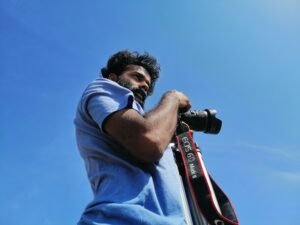
Issues regarding land grabbing in Kuchchaveli were frequently reported in newspapers and websites, but they had become “normalized.” It reached a state where it was viewed as “just another news story.” However, in the Kuchchaveli Divisional Secretariat division—where only about 480 Sinhalese people reside—32 Buddhist Viharas (Temples) have been constructed.
During this period, the Centre for Policy Alternatives released a comprehensive report on land grabbing in the North and East, which featured a dedicated chapter on Kuchchaveli. I decided to focus specifically on Kuchchaveli for a documentary because the situation there is unique. While state departments like Defense, Archaeology, and Forest Conservation are usually the primary actors in land grabs across the North and East, in Kuchchaveli, Buddhist monks are directly and actively involved in seizing land.
What are the specific challenges in Kuchchaveli?
Kuchchaveli is a strategic location connecting Trincomalee and Mullaitivu. Land is being grabbed here to break the continuous territorial link of the Tamil-speaking people. This is being carried out through the “Buddhization” of Tamil and Muslim areas.
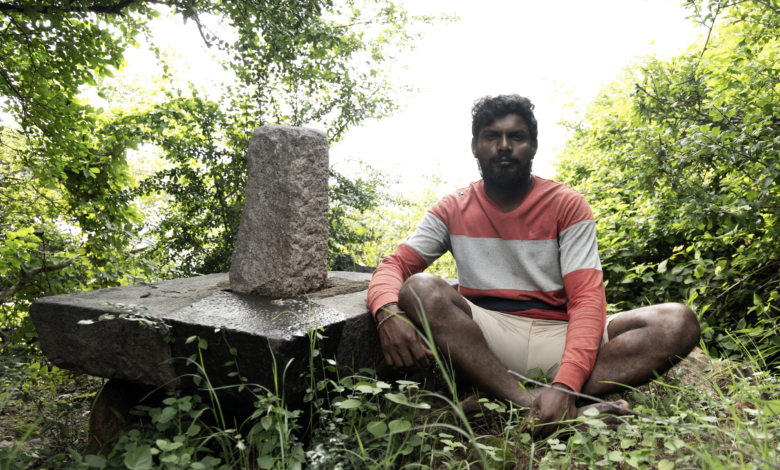
For example, at the Sembeeswarar Temple, a site where Tamil people have worshipped for generations, Buddhist monks have now occupied the land, claiming it as an archaeological site. They have placed Buddha statues and restricted the locals’ right to worship. Even during the Pongal festival, military personnel with boots and weapons were seen wandering near the ritual fires.
What kind of impact has this had on the local Muslim community?
The land grabbing is not restricted to one community. Ancient mosques, paddy fields, burial grounds (Meiyawadi), and schools belonging to the Muslim people have also been encroached upon. The documentary highlights how these communities are being marginalized in their own traditional lands.
Did you have to practice self-censorship while making this documentary?
Before filming, I was determined not to self-censor and to include every scene as I captured it. However, I later realized the reality was different. I had to be extremely careful not to create further problems for the local people who are already facing threats from the military, intelligence units, and Buddhist monks.
I specifically avoided or edited out certain scenes to ensure that the people’s remaining access to their places of worship wasn’t completely cut off due to the film. For instance, I had to censor footage of the military walking with boots near the temple’s sanctum, certain video clips of my own interrogation by the authorities, and some of the more radical anti-state opinions expressed by the locals.
What has been the reaction since the release of the documentary?
After the release, I faced significant backlash on social media, particularly from Sinhala-Buddhist extremist Facebook pages. They targeted me and the Centre for Policy Alternatives, claiming we were trying to instigate communal disharmony. This level of intimidation makes it difficult for people on the ground to speak out. In fact, many were afraid to even appear in the documentary to share their stories due to the climate of fear.