
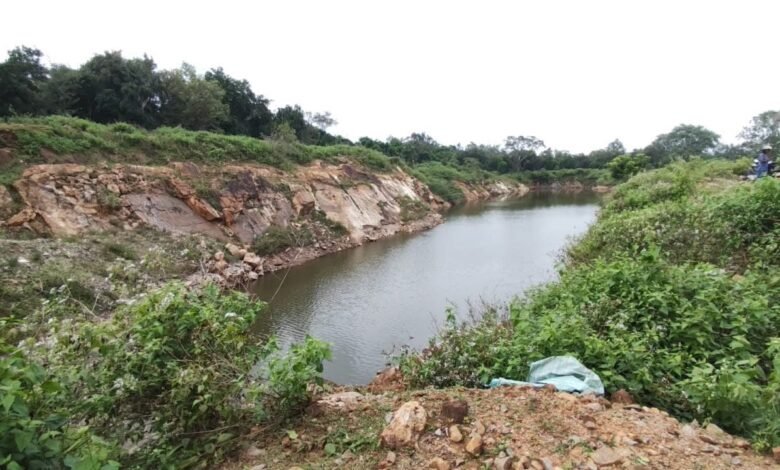
Kadhaliyar Samalankulam: Destroyed for Stone Quarrying
Story | North East Narrative Picture | T.Ravikaran
Kadhaliyar Samalankulam is a village located in the Oddusuddan Divisional Secretariat Division of the Mullaitivu District. This village is historically connected to the legacy of Kulasekaram Vairamuthu Pandara Vanniyan, who fought against the British colonial forces from the Vanni region and attained heroic martyrdom. Kadhaliyar Samalankulam is well known for its agricultural activities and livestock farming.
The Vanni mainland, located in the Northern Province of Sri Lanka, is rich in natural resources. Forests and land, seas and lagoons, sand and mountains are all-natural resources that define the identity of this vast region. Before the Vanni mainland was taken over by the Sri Lankan government forces, it was administered by the Liberation Tigers of Tamil Eelam (LTTE). During that period, all kinds of natural resources in the Vanni mainland were preserved and protected for future generations.
Even to cut a single small tree from the forests that covered most of the Vanni mainland, permission had to be obtained from the LTTE’s Department of Forest Resources. Those who cut trees without permission were subjected to punishment, including imprisonment. Since the end of the war in 2009 up to the present day, all-natural resources of the Vanni mainland have been systematically plundered. The destruction of these natural resources has reached a level where the very environmental identity of the land is being transformed.
It is against this backdrop that many of the small hills, hillocks, and rocky outcrops found across the Vanni mainland are being excavated and destroyed by granite quarry operators. For example, Vaveddi Malai, located in the surroundings of the Oddusuddan Thanthonreeswarar Hindu Temple in Oddusuddan, where structural remains of an ancient capital had once been found, was unlawfully destroyed by granite traders. Not only was Vaveddi Malai—an area that should have been protected by the Department of Archaeology—destroyed, but the archaeological remains that testified to the history of the Tamil people in that area were also wiped out.
Following the destruction of Vaveddi Malai, the black granite rock outcrop found in Kadhaliyar Samalankulam—a village located near that hill—was excavated by granite quarry operators starting in 2018. In response to strong opposition from the local residents, the quarrying activities were halted in 2022. However, the massive pit created during the excavation has not been filled with soil and remains in the same state even today.
At present, steps are once again being taken to resume granite quarrying at the site. The residents of Kadhaliyar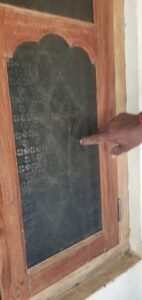 Samalankulam have expressed their strong opposition to this move. Commenting on the issue, a woman from Kadhaliyar Samalankulam stated that “It was stopped in early 2018 after a decision was taken at the Assistant Government Agent (Divisional Secretary) level. We were living peacefully then. Now there is a lot of dust. Our house is only about one hundred meters away from the site. We had to fix glass windows in our house. Due to the vibrations caused by stone blasting, two windowpanes in our house have cracked, and cracks have also appeared on the walls. Even today, the house next to ours has not been fitted with glass windows, and the walls there remain cracked.” She explained how severely their village has been affected by the stone quarrying company.
“Last week, some people arrived in two vehicles. We came out and stood on the road. We did not allow anyone to go to the stone-crushing site. Everyone who came was Sinhala. One person from the Pradeshiya Sabha was also there. The Grama Niladhari (GS) came, and there was another Tamil boy as well. They said they had come to inspect the land. We told them not to go and see the site. We will not allow stone quarrying in our village. We have been severely affected by this. We have no grazing land for our cattle. We bring our cattle to graze only in this scrubland; there is no other place for them to graze. If cattle fall into these pits and die, who will take responsibility? If they bring stone crushers here, are we supposed to carry our cattle on our shoulders? Leave the cattle aside—look at our lives. If a crusher is set up here, where will the dust go? Our houses are within a hundred meters. Because of the previous crusher, our houses are already damaged and lying in ruins. There is no way to even repair them. Now they are coming back again to demolish and destroy whatever little remains,” she said angrily.
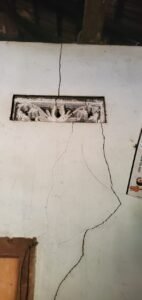 “Truly, there are many patients living here. There are many people suffering from heart disease and kidney failure. The noise from stone blasting and crushing will affect them severely. More than that, our houses have been badly damaged. The walls and windows have all developed cracks. How are we supposed to repair them again?
When stones are blasted, the loud noise frightens children. Since our houses are located very close to the crusher, the sound is ear-splitting. We do not want this crusher. We have already suffered enough because of it. If anyone comes again to restart this, we will have no choice but to protest.
A resident of the village who raises livestock alongside farming said:
“There is no water in the wells. We even dug a pipe well, but there is still no water. However, in the stone quarry they dug, water has collected like a large pond. We are not sure if that is the reason why our wells have run dry,” he expressed, raising his concern.
These voices all echo a single, haunting truth: “If you destroy nature, nature will eventually destroy you.”